Methanomethylicia
| Methanomethylicia | ||||||||||||
|---|---|---|---|---|---|---|---|---|---|---|---|---|
| Systematik | ||||||||||||
| ||||||||||||
| Wissenschaftlicher Name | ||||||||||||
| Methanomethylicia | ||||||||||||
| corrig. Vanwonterghem et al. 2016 |
„Ca. Methanomethylicia“ (früher auch „Ca. Methanomethylia“) ist eine vorgeschlagene Klasse (Kandidatenklasse) von Archaeen, deren Vertreter in anoxischen (sauerstofffreien) Umgebungen mit hohen Methanflüssen (Methandurchsatz) leben, ähnlich wie einige Bathyarchaeen.[1]
Diese Klade war ursprünglich als ein Phylum mit der Bezeichnung „Ca. Verstraetearchaeota“ vorgeschlagen worden, eine frühere provisorische Bezeichnung ist auch Terrestrial Miscellaneous Crenarchaeota Group (TMCG).[2]
Genom und Stoffwechsel
Das Genom dieser Archaeen kodiert die Gene, die für die methylotrophe Methanogenese benötigt werden, und könnten Energie durch einen ähnlichen Mechanismus erhalten, wie er für die obligat H2-abhängigen methylotrophen „Methanomassiliicoccales“ im Reich Methanobacteriati (früher Euryarchaeida), Phylum (Thermoplasmata)[3] und die „Methanofastidiosa“ (alias Arc-I-Gruppe oder WSA2-Gruppe; Phylum Methanobacteriota, ebenfalls im Reich Methanobacteriati, siehe Methanogenese)[4] vorgeschlagen wurde. „Ca. Methanomethylicia“ und „Ca. Bathyarchaeia“ zeigen, dass die Methanogenese nicht nur im Reich Methanobacteriati (Euryarchaeida) vorkommt und somit ein älterer Stoffwechsel ist als ursprünglich erwartet.[5]
Etymologie
Die Bezeichnung „Verstraetearchaeota“ wurde vorgeschlagen in Anerkennung der Beiträge von Professor Willy Verstraete (Centre for Microbial Ecology and Technology der Universität Gent, Belgien) zur Entwicklung und Anwendung von technischen mikrobiellen Ökosystemen (z. B. anaerobe Fermenter). Der Suffix ‚-archaeota‘ verweist auf ein (ursprünglich vorgeschlagenes) Archaeenphylum.[6]
Die Bezeichnung „Methanomethylicia“ kommt von neulateinisch Methanomethylicus und meint einen Methan-Produzierer, der Suffix ‚-ia‘ zeigt eine Klasse an.[6]
Systematik
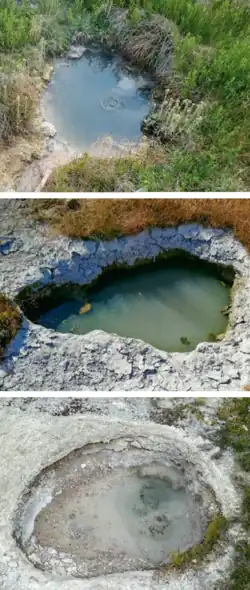
Die List of Prokaryotic names with Standing in Nomenclature (LPSN) stuft die ursprünglich als Phylum „Ca., Verstraetearchaeota“ vorgeschlagene Klade heute als Klasse „Ca. Methanomethylicia“ ein (wobei der Bezeichner „Verstraetearchaeota“ dort weiter formal im Rang eines Phylums mit den übergeordneten Thermoproteota synonymisiert wird, was aber nicht mit dem Umfang der jeweils bezeichneten Klade zu tun hat).
Die Taxonomie der Genome Taxonomy Database (GTDB) ordnet die Nezhaarchaeen und Culexarchaeen als Ordnungen (nebst einer weiteren provisorisch als o__CALHIW01 bezeichneten Gruppe) den Methanomethylicia zu.[7] In der LPSN sind erstere als Phylum „Ca. Nezhaarchaeota“ direkt im Reich Thermoproteati angesiedelt;[8] die Culexarchaeen sind in der LPSN unbekannt.
In der Taxonomie des NCBI sind die Nezhaarchaeen als Phylum „Ca. Nezhaarchaeota“,[9] die Culexarchaeen als Phylum „Ca. Culexarchaeota“,[10] und die Methanomethylicia selbst als Phylum „Ca. Methanomethylicota“ direkt dem Reich Thermoproteati zugeordnet.[11]
Systematik der „Methanomethylicia“ gemäß LPSN,[6] sowie Genome Taxonomy Database (GTDB)[12][13][14] und National Center for Biotechnology Information (NCBI) mit Stand 20. Juni 2025:
Klasse „Ca. Methanomethylicia“ corrig. Vanwonterghem et al. 2016
[ „Ca. Methanomethylia“ Vanwonterghem et al. 2016]
- Ordnung „Ca. Methanohydrogenicales“ corrig. Berghuis et al. 2019
[„Ca. Methanohydrogenales“ Berghuis et al. 2019]- Familie „Ca. Methanohydrogenicaceae“ Berghuis et al. 2019
- Gattung „Ca. Methanohydrogenicus“ Berghuis et al. 2019
- Familie „Ca. Methanohydrogenicaceae“ Berghuis et al. 2019
- Ordnung „Ca. Methanomediales“ Berghuis et al. 2019
- Ordnung „Ca. Methanomethylicales“ corrig. Vanwonterghem et al. 2016 (bzw. corrig. Berghuis et al. 2019)
[„Ca. Methanomethyliales“ Vanwonterghem et al. 2016 (bzw. Berghuis et al. 2019)]- Familie „Ca. Methanomethylicaceae“ corrig. Vanwonterghem et al. 2016 (bzw. corrig. Berghuis et al. 2019)
[„Ca. Methanomethyliaceae“ Vanwonterghem et al. 2016 (bzw. Berghuis et al. 2019)]- Gattung „Ca. Methanomethylicus“ Vanwonterghem et al. 2016
- Spezies „Ca. Methanomethylicus mesodigestus“ corrig. Vanwonterghem et al. 2016
[„Ca. Methanomethylicus mesodigestum“ Vanwonterghem et al. 2016,
„Ca. Methanomethylicota archaeon UBA76“,
„Ca. Verstraetearchaeota archaeon UBA76“], mit- Stämme V1; V2; UBA76; POMEDNA-A01 und 7-NCT_042 (GTDB)
- Spezies „Ca. Methanomethylicus oleisabuli“ corrig. Vanwonterghem et al. 2016
[„Ca. Methanomethylicus oleusabulum“ Vanwonterghem et al. 2016,
„Ca. Methanomethylicota archaeon UBA156“,
„Ca. Verstraetearchaeota archaeon UBA156“], mit- Stämme V3 und UBA156
- Spezies Methanomethylicus sp024464205 (GTDB) [Ca. Methanomethylicia archaeon isolate (NCBI)], mit
- Stamm LCB019-004 – Fundort: Lower Culex Basin, Yellowstone-Nationalpark[19]
- Spezies Methanomethylicus sp028683025 (GTDB) [Ca. Methanomethylicus sp. isolate OWC_0001 (NCBI)], mit
- Spezies „Ca. Methanomethylicus mesodigestus“ corrig. Vanwonterghem et al. 2016
- Gattung „Ca. Methanosuratincola“ corrig. Vanwonterghem et al. 2016 [„Ca. Methanosuratus“ Vanwonterghem Vanwonterghem et al. 2016] (GTDB, in der LPSN in eigener Klasse „Ca. Methanosuratincolia“ der Thermoproteota
- Gattung „Ca. Methanomethylicus“ Vanwonterghem et al. 2016
- Familie „Ca. Methanomethylicaceae“ corrig. Vanwonterghem et al. 2016 (bzw. corrig. Berghuis et al. 2019)
- Ordnung „Ca. Methanomethylovorales“ Hua et al. 2019 (LPSN)
- Familie „Ca. Methanomethylovoraceae“ Hua et al. 2019 (LPSN)
- Gattung „Ca. Methanomethylovorus“ Hua et al. 2019 (LPSN) [WYZ-LMO10 (GTDB, wegen JZ-2_bin_200, dort aber in Fam. Methanomethylicaceae)]
- Spezies WYZ-LMO10 sp004347955, mit
- Stamm WYZ-LMO10 (GTDB & NCBI) – Fundort: Sediment einer Thermalquelle in/am Shoshone Lake, Yellowstone-Nationalpark
- Stamm LCB024-024 (GTDB & NCBI) – Fundort: Lower Culex Basin, Yellowstone-Nationalpark[19]
- Stamm LCB019-026 (GTDB & NCBI) – Fundort: Lower Culex Basin, Yellowstone-Nationalpark[19]
- Stamm SJ3.Bin27 (GTDB & NCBI) – Fundort: Thermalquelle Smokejumper3, Smoke Jumper Hot Springs,[21] Yellowstone-Nationalpark
- Spezies WYZ-LMO10 sp014361445 (GTDB) [Ca. Methanomethylicales archaeon isolate MAG-3 (NCBI)], mit
- Stamm MAG-3
- Spezies WYZ-LMO10 sp026414165 (GTDB) [Ca. Methanomethyliaceae archaeon isolate SKW203 (NCBI)], mit
- Stamm SKW203
- Spezies „Ca. Methanomethylovorus thermophilus“ Hua et al. 2019 (LPSN) [WYZ-LMO10 sp029887795 (GTDB, wg. JZ-2_bin_200), mit
- Spezies WYZ-LMO10 sp004347955, mit
- ?Gattung WYZ-LMO11 (GTDB, dort aber in Fam. Methanomethylicaceae, d. h. evtl zusammen mit „Ca. Methanosuratincola“ in eigene Klasse Methanosuratincolia gem. LPSN)]
- Spezies WYZ-LMO11 sp004348015 (GTDB) [Ca. Methanomethylicota archaeon isolate WYZ-LMO11 (NCBI)], mit
- Stamm WYZ-LMO11 (GTDB & NCBI) – Fundort: Sediment einer Thermalquelle in/am Shoshone Lake, Yellowstone-Nationalpark
- Stamm LCB003-007 (GTDB & NCBI) – Fundort: Lower Culex Basin, Yellowstone-Nationalpark[19]
- Stamm LCB024-038 (GTDB & NCBI) – Fundort: Lower Culex Basin, Yellowstone-Nationalpark[19]
- Stamm Verst-YHS
- Spezies WYZ-LMO11 sp020832905 (GTDB), mit
- Stamm Bin S31 (GTDB & NCBI) – Fundort: Quelle GGS063 bei Scalloped Spring,[22] Gesir Spring Group, Yellowstone-Nationalpark
- Spezies WYZ-LMO11 sp004348015 (GTDB) [Ca. Methanomethylicota archaeon isolate WYZ-LMO11 (NCBI)], mit
- Gattung „Ca. Methanomethylovorus“ Hua et al. 2019 (LPSN) [WYZ-LMO10 (GTDB, wegen JZ-2_bin_200, dort aber in Fam. Methanomethylicaceae)]
- Familie „Ca. Methanomethylovoraceae“ Hua et al. 2019 (LPSN)
- Ordnung „Ca. Methanomethyloarchaeales“ Hua et al. 2019
- Familie „Ca. Methanomethyloarchaeaceae“ corrig. Hua et al. 2019
[„Ca. Methanomethyloarchaeceae“ Hua et al. 2019]- Gattung „Ca. Methanomethyloarchaeum“ Hua et al. 2019
- Spezies „Ca. Methanomethyloarchaeum antiquum“ Hua et al. 2019, mit
- Stamm GMQP bin_44
- Spezies „Ca. Methanomethyloarchaeum antiquum“ Hua et al. 2019, mit
- Gattung „Ca. Methanomethyloarchaeum“ Hua et al. 2019
- Familie „Ca. Methanomethyloarchaeaceae“ corrig. Hua et al. 2019
- ?Ordnung o__CALHIW01 (GTDB)
- Familie f__CALHIW01
- Gattung CALHIW01
- Spezies CALHIW01 sp038845975, mit
- Stamm JZ-1_201705_bins_15
- Spezies CALHIW01 sp938030905, mit
- Stamm S1_Bin_METABAT__10_1
- Spezies CALHIW01 sp038845975, mit
- Gattung CALHIW01
- Familie f__CALHIW01
Abgespalten wurde:
Klasse „Ca. Methanosuratincolia“ Wu et al. 2024
Einzelnachweise
- ↑ Cindy J. Castelle, Jillian F. Banfield: Major New Microbial Groups Expand Diversity and Alter our Understanding of the Tree of Life. In: Cell Perspective, Band 172, Nr. 6, S. 1181–1197, 8. März 2018; doi:10.1016/j.cell.2018.02.016 (englisch).
- ↑ Panagiotis S. Adam, Guillaume Borrel, Céline Brochier-Armanet, Simonetta Gribaldo: The growing tree of Archaea: new perspectives on their diversity, evolution and ecology. In: The ISME Journal, Band 12, Nr. 11, 4. August 2017, S. 2407–2425; doi:10.1038/ismej.2017.122, PMC 5649171 (freier Volltext), PMID 28777382 (englisch).
- ↑ NCBI Taxonomy Browser: Methanomassiliicoccales (order).
- ↑ NCBI Taxonomy Browser: Candidatus Methanofastidiosa (class).
- ↑ Inka Vanwonterghem, Paul N. Evans, Donovan H. Parks, Paul D. Jensen, Ben J. Woodcroft, Philip Hugenholtz, Gene W. Tyson: Methylotrophic methanogenesis discovered in the archaeal phylum Verstraetearchaeota. In: Nat Microbiol, Band 1, Nr. 16170, 3. Oktober 2016; doi:10.1038/nmicrobiol.2016.170 (englisch).
- ↑ a b c LPSN: Class "Candidatus Methanomethylicia", Phylum "Candidatus Verstraetearchaeota".
- ↑ GTDB: Methanomethylicia.
- ↑ LPSN: Phylum "Candidatus Nezhaarchaeota"?
- ↑ NCBI Taxonomy Browser: Candidatus Nezhaarchaeota (tree), Details: "Candidatus Nezhaarchaeota" Wang et al. 2019 (phylum); graphisch: Candidatus Nezhaarchaeota, auf: Lifemap.
- ↑ NCBI Taxonomy Browser: Candidatus Culexarchaeota, Details: "Candidatus Culexarchaeota" Kohtz et al. 2022 (phylum); graphisch: Candidatus Culexarchaeota, auf: Lifemap.
- ↑ NCBI Taxonomy Browser: Candidatus Methanomethylicota (tree), "Candidatus Methanomethylicota" corrig. Vanwonterghem et al. 2016 (phylum), homotypic synonym: "Candidatus Verstraetearchaeota" Vanwonterghem et al. 2016; graphisch: Candidatus Metmanomethylicia, auf: Lifemap, NCBI Version.
- ↑ Kerrin Mendler, Han Chen, Donovan H. Parks, Briallen Lobb, Laura A. Hug, Andrew C. Doxey: AnnoTree: visualization and exploration of a functionally annotated microbial tree of life. In: Nucleic Acids Research 47. 21. Mai 2019, S. 4442–4448, doi:10.1093/nar/gkz246 (englisch, uwaterloo.ca).
- ↑ Suzanna L. Bräuer, Nathan Basiliko, Henri M. P. Siljanen, Stephen H. Zinder: Methanogenic archaea in peatlands. In: FEMS Microbiology Letters, Band 367, Nr 20, 17. Oktober 2020, fnaa172; doi:10.1093/femsle/fnaa172 (englisch).
- ↑ Christian Rinke, Maria Chuvochina, Aaron J. Mussig, Pierre-Alain Chaumeil, Adrian A. Davin, David W. Waite, William B Whitman, Donovan H. Parks, Philip Hugenholtz: Resolving widespread incomplete and uneven archaeal classifications based on a rank-normalized genome-based taxonomy. Preprint auf: CSH bioRχiv vom 17. Februar 2021; doi:10.1101/2020.03.01.972265 (englisch).
- ↑ NCBI Biosample: SAMN36037620; Sample name: Thermoplasmatota JZ-2_201705_bins_37.
- ↑ a b c d Dazhuyuan, Jieming Hot Spring GeoNames, Laxing Village, Mapcarta (de).
- ↑ NCBI Biosample: SAMN36037737; Sample name: Thermoproteota JZ-2_201907_bins_38.
- ↑ NCBI Biosample: SAMN36037788; Sample name: Caldarchaeum sp. JZ-2_202101_bins_30.
- ↑ a b c d e Mackenzie M. Lynes, Viola Krukenberg, Zackary J. Jay, Anthony J. Kohtz, Christine A. Gobrogge, Rachel L. Spietz, Roland Hatzenpichler: Diversity and function of methyl-coenzyme M reductase-encoding archaea in Yellowstone hot springs revealed by metagenomics and mesocosm experiments. In: Nature: ISME Communications, Band 3, Nr. 22, 22. März 2023; doi:10.1038/s43705-023-00225-9, PMC 10033731 (freier Volltext), PMID 36949220, ResearchGate:369467964 (englisch).
- ↑ Old Woman Creek, GeoNames.
- ↑ Smoke Jumper Hot Springs, GeoNames.
- ↑ Scalloped Spring, GeoNames